
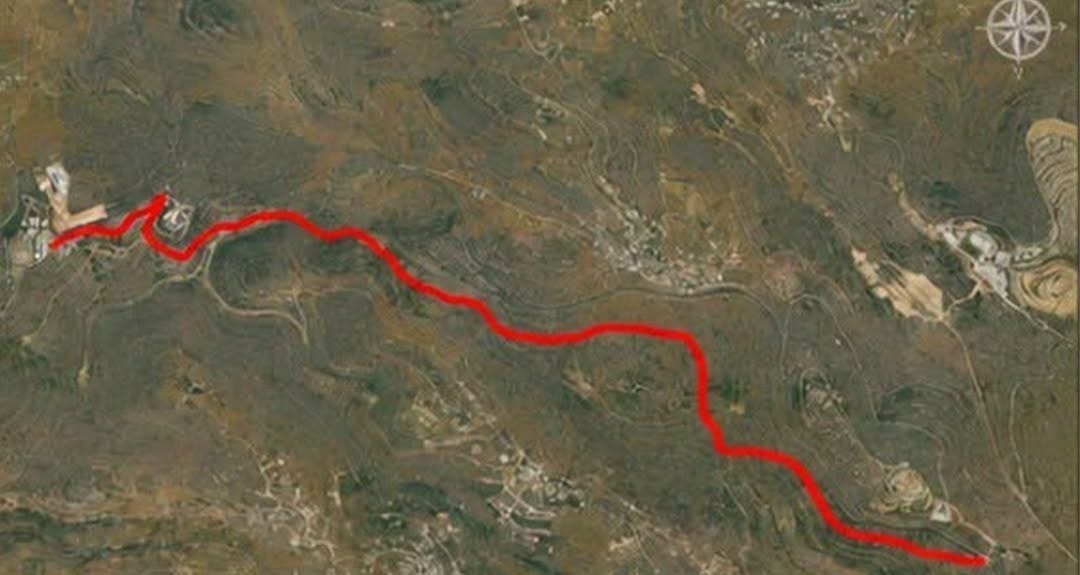
The Colonization and Wall Resistance Commission disclosed on Tuesday, November 3, 2026, that Israeli occupation authorities have issued military expropriation order (T/48/26), seizing 26 dunams of Palestinian land across the towns of Deir Nidham, Um Safa, and Atara, north of Ramallah. Issued on October 28 and remaining in force through the end of 2028, the order grants exclusive military possession of a land corridor designed to interconnect colonial outposts and settlement infrastructure in the region.
The land seizure targets key agricultural and grazing parcels, cutting through the geographical continuity between Palestinian villages to integrate bypass routes and settlement networks.
Military Expropriation Order (T/48/26): Grants exclusive executive and military control over a contiguous strip of land belonging to residents of Deir Nidham, Um Safa, and Atara, effectively barring Palestinian landowners from accessing their surrounding agricultural plots.
Strategic Axis Consolidation: The targeted corridor directly reinforces the connection between the settlements of Ateret and Halamish (Neve Tzuf) along with their associated outposts, expanding illegal settlement infrastructure while choking off Palestinian movement.
Broader Settlement Escalation Context: The order coincides with recent Israeli approvals for thousands of settlement units across the West Bank, including 342 units in Asa’el (Samoa’), 225 units in Beit Hagai (Dura), and 567 units in Hebron announced by Finance Minister Bezalel Smotrich—who continues to advocate for the formal annexation of over 80% of the West Bank.
Escalating Attacks on Land and Agriculture: According to commission records, over 4,900 settler attacks were documented in the first eight months of 2026 alone, accompanied by thousands of dunams confiscated under military orders to dismantle rural Palestinian livelihoods.
What This Signals
When an occupying authority issues military orders to confiscate private agricultural land and construct corridors linking illegal outposts, it signals a deliberate strategy of territorial fragmentation. The issue extends beyond the initial 26 dunams; it relies on converting rural farming networks into isolated enclaves surrounded by settlement bypass roads. A Palestinian farming community navigating its own valley faces the permanent loss of its ancestral lands through administrative orders. That is what is being aggressively executed, parcel by parcel and order by order, while the world looks elsewhere.