
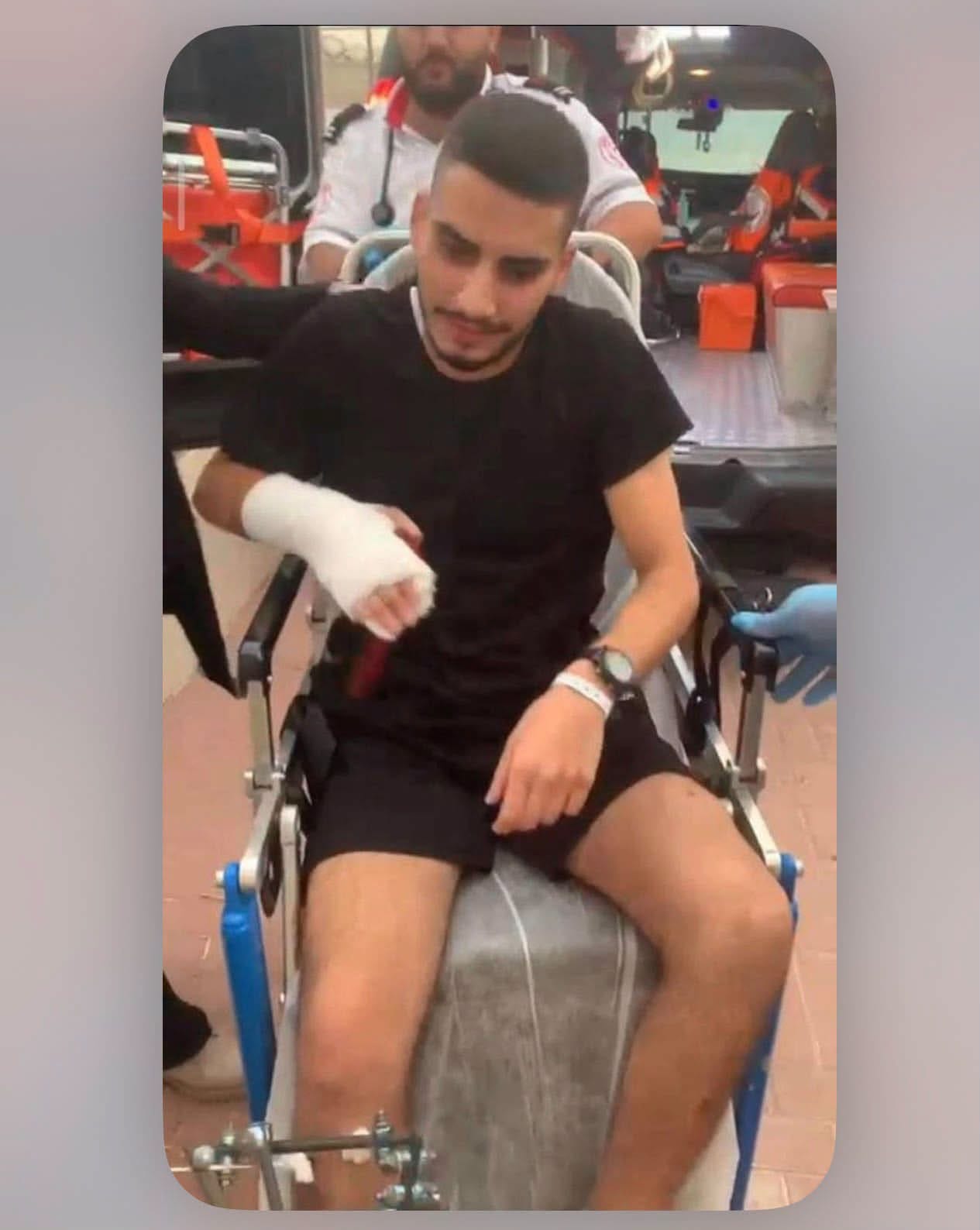
In one of the most severe documented cases of systemic medical neglect in Israeli detention facilities, 23-year-old Jerusalemite detainee Tha’er Shehadeh Bikirat—from Sur Baher, south of occupied Jerusalem—is facing a critical, life-threatening health deterioration. According to a legal visit report released by the Prisoners’ Affairs Commission, Bikirat suffers from the lasting trauma of four bullet wounds sustained during his arrest, including a live bullet still lodged in his left lung, entirely untreated and unmanaged without even basic pain relief.
Four Bullet Wounds & Untreated Trauma: Bikirat’s body sustained extensive ballistic trauma prior to and during detention:
Right Hand: Pierced by two bullets, causing severe bone fragmentation.
Right Foot: Struck by an explosive “Dumdum” bullet, shattering bones and requiring emergency surgical placement of metal plates.
Chest and Lung: A fourth bullet penetrated the left side of his chest and remains permanently lodged in his left lung.
Flawed Arrest Cycle: Following the initial shooting, Bikirat underwent three surgical operations at Hadassah Ein Kerem Hospital to implant metal plates in his foot before being temporarily released to house arrest. Israeli occupation forces subsequently re-arrested him, forcing him behind bars with an unhealed body and ongoing medical complications.
Severe Daily Suffering: Detainee Bikirat experiences chronic shortness of breath due to the lung-lodged bullet, severe mobility impairment in his right foot, radiating bodily pain, and a complete denial of painkillers or post-surgical monitoring by prison clinic staff.
Co-Existing Epidemics in Negev Prison: The commission’s report highlighted a catastrophic spread of medical neglect across Ketziot Prison, citing worsening outbreaks of the skin disease scabies and infected boils affecting multiple administrative and security detainees—including Amr Mansour (Nablus), Muhammad Bkhait (Askar Camp), and Nawwar Mash’ati (Deir al-Hatab)—who are routinely denied clinic transfers.
What This Signals
When an occupying authority imprisons a young man with four gunshot wounds, leaves a live round lodged in his lung, and denies him basic pain medication, it signals a deliberate policy of slow lethal neglect behind bars. The prison medical infrastructure is converted into an instrument of attrition where chronic injuries are left to fester. A detainee requiring specialized thoracic surgery is subjected to silent physical collapse inside an overcrowded desert camp. That is what is being quietly executed, cell by cell and detainee by detainee, while the world looks elsewhere.