
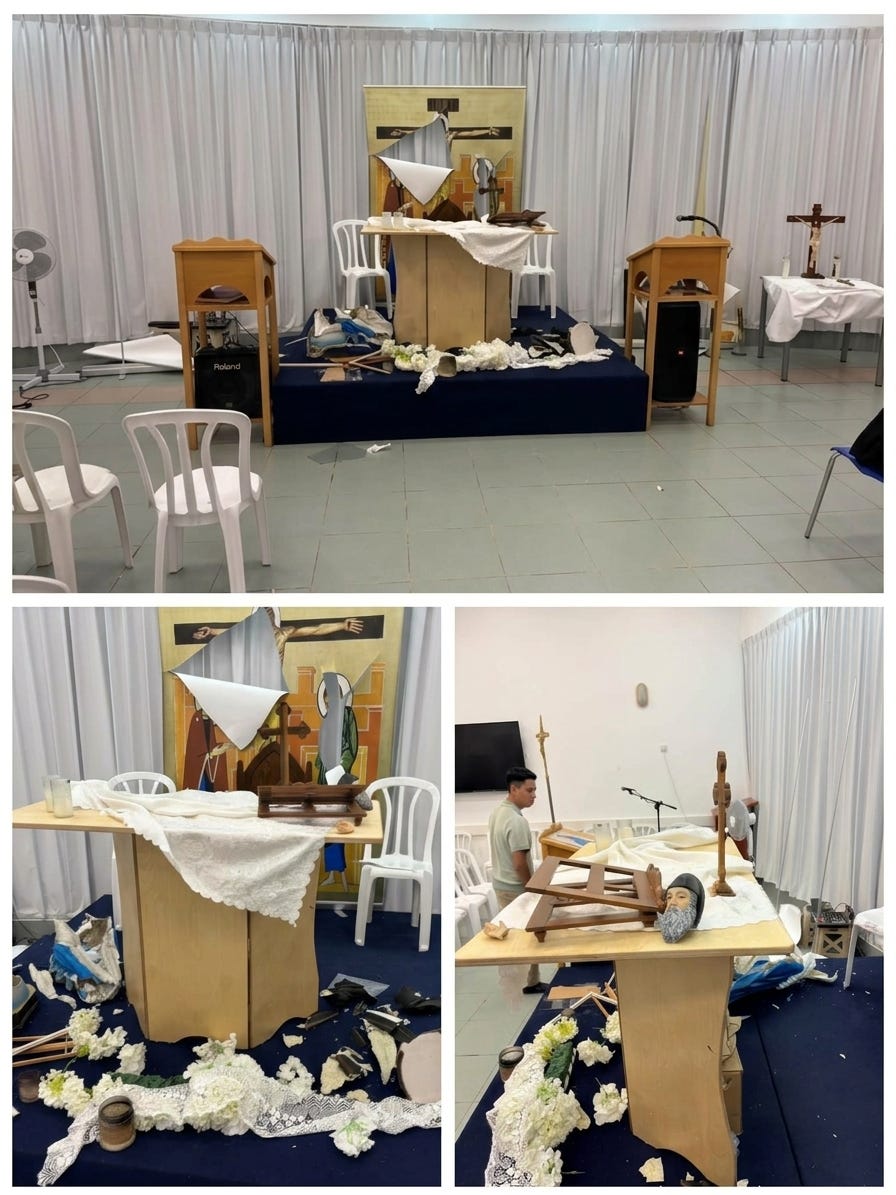
On Monday, November 2, 2026, the Maronite Archbishopric of Haifa issued an official statement condemning an act of violent vandalism targeting a Maronite chapel in the northern coastal city of Nahariya. Unidentified perpetrators attacked the place of worship on November 1, coinciding with All Saints’ Day.
The Archbishopric characterized the attack as an intolerable crime, placing it within a rising wave of systemic hostility directed at Christian holy sites, clergy, and properties across the region.
Official Condemnation: The Maronite Archbishopric emphasized that “such acts can neither be justified nor tolerated,” noting that the Christian community remains steadfast in its refusal to respond to hatred with violence or retaliation.
Demands for Judicial Action: The Church called upon Israeli law enforcement and security authorities to initiate an immediate, decisive investigation to identify, arrest, and prosecute the perpetrators under the full extent of the law.
Protection of Sacred Sites: The statement reiterated that proper security measures must be implemented to safeguard the chapel and guarantee the community’s inalienable right to practice their faith without threat or intimidation.
The attack in Nahariya follows a documented surge in hate crimes and acts of vandalism targeting Christian institutions, clergy, and pilgrims across Jerusalem, northern Israel, and the occupied West Bank:
Spitting and Physical Harassment: Repeated incidents of extremists spitting on and verbally harassing Christian clergy and pilgrims in the Old City of Jerusalem.
Vandalism and Arson Attempts: Desecration of the St. James Monastery in the Armenian Quarter, arson attempts near church properties, and the burning of religious structures, including a mosque in Mikhmash.
Culture of Impunity: Human rights organizations and church leaders frequently attribute these incidents to emboldened extremist groups operating within an environment of minimal state accountability and lax law enforcement response.
What This Signals
When a Maronite chapel is vandalized on a major holy day like All Saints’ Day, it signals an expanding climate of religious intolerance where minority places of worship are targeted with impunity. The incident is not an isolated act of vandalism; it reflects how escalating nationalist extremist rhetoric manifests in direct attacks against historic Christian communities. A religious congregation seeking to worship on a holy day faces desecration of its sacred space. That is what is being quietly tolerated, incident by incident and community by community, while the world looks elsewhere.